
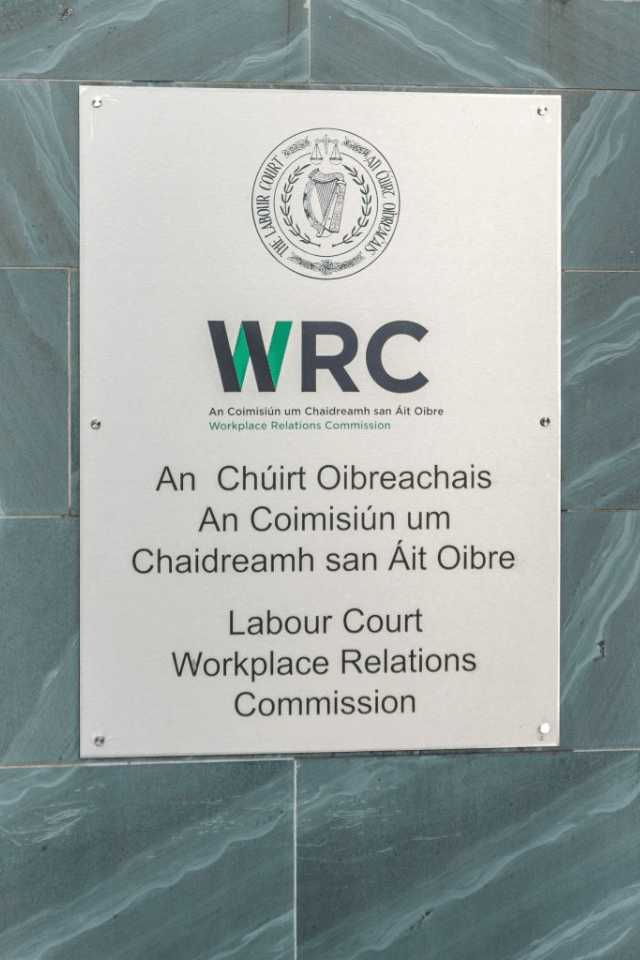
Even large employers must follow strict rules when it comes to employee pay. A recent Labour Court decision involving Irish Rail confirmed that employers cannot take money directly from a worker’s wages unless the employee consents or it’s clearly stated in their contract.
The ruling, which ordered Irish Rail to repay €4,900 to one of its inspectors, is a strong reminder that employees’ wages are legally protected under the Payment of Wages Act 1991.
Case Background
The case involved Barry McKelvey, an Irish Rail inspector who owed the company more than €83,000 following an earlier legal dispute. After a long and complex process that reached the Supreme Court, Irish Rail began deducting €200 per week from his wages without his written consent.
Mr McKelvey objected to the deductions, stating he had never agreed to them. He then brought a case to the Workplace Relations Commission (WRC), and later to the Labour Court, seeking repayment.
What the Labour Court Found
The Labour Court agreed with Mr McKelvey. It ruled that, while the company was indeed owed the debt, it had no legal right to recover it through payroll deductions.
Key findings included:
- The company could not show any contract clause that allowed for the deductions.
- Even though Mr McKelvey owed the money, consent was still required.
- Employers must follow proper legal procedures — they cannot take matters into their own hands.
As a result, the court ordered Irish Rail to repay €4,900 to Mr McKelvey.
Why This Case Matters for Employees
This decision reinforces a key protection for all Irish workers:
Your employer cannot deduct money from your wages without your written consent or a lawful reason.
This applies even in unusual cases, such as where an employee owes their employer money. Unless there is a clear contractual term or agreement, employers risk breaching the Payment of Wages Act by making deductions.
For employees, this means:
- You must always receive your full pay unless you’ve agreed otherwise.
- Any deductions must be clearly explained and approved in writing.
- If money is taken without consent, you can bring a complaint to the WRC.
Our Perspective at Employment Matters
At Employment Matters, we often see situations where employers make deductions — sometimes for uniforms, training, or other costs — without proper authority. Cases like this prove that even the largest organisations must follow the law.
Workers have the right to full and fair pay, and we’re here to ensure that right is respected.
Final Thoughts
The Irish Rail ruling is a clear example of how employment law protects workers from unlawful pay deductions. No matter the size of the company or the complexity of the situation, your wages are protected by law.
👉 If your employer has made deductions from your pay that you didn’t agree to, contact our team today for confidential advice.